Massaranduba Siding: Design, Installation & Performance Guide
Massaranduba siding delivers deep red-brown architectural richness, structural strength, and long-term exterior durability. Known for its exceptional density and uniform appearance, Massaranduba is frequently selected for projects that want a bold, warm hardwood façade with reliable performance in demanding exterior conditions.
This guide explains what Massaranduba siding is, how it behaves in real-world exterior wall assemblies, and why it’s typically installed as a ventilated rainscreen system — so you can make informed, performance-based decisions before installation begins.
Are you doing a ceiling or soffit? Check this page out instead.
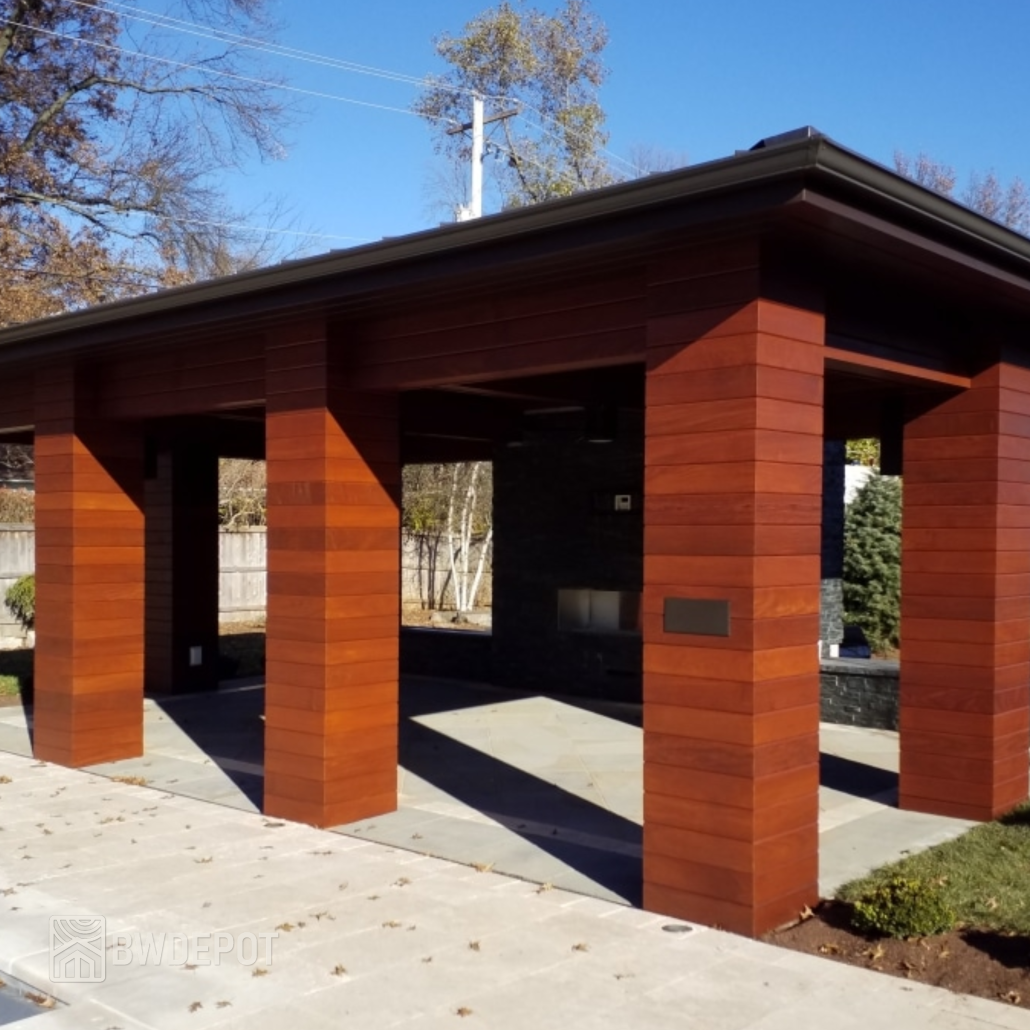
What Exactly is Massaranduba RainScreen Siding?
Massaranduba rainscreen siding is a high-density tropical hardwood cladding system installed over vertical furring strips to create a continuous ventilation cavity behind the boards. This true ventilated rainscreen design allows airflow on all sides of the material, helping manage moisture, regulate surface temperatures, and support long-term dimensional behavior.
Unlike direct-applied siding systems, a properly detailed rainscreen allows incidental moisture to drain and dry naturally, reducing the risk of trapped humidity within the wall assembly. Because Massaranduba is extremely dense and structurally strong, it performs reliably in exterior applications when paired with correct fastening methods and proper spacing.
When milled and dried correctly, Massaranduba siding offers high compressive strength, solid board integrity, and dependable long-term performance across vertical cladding installations.
Color & Appearance
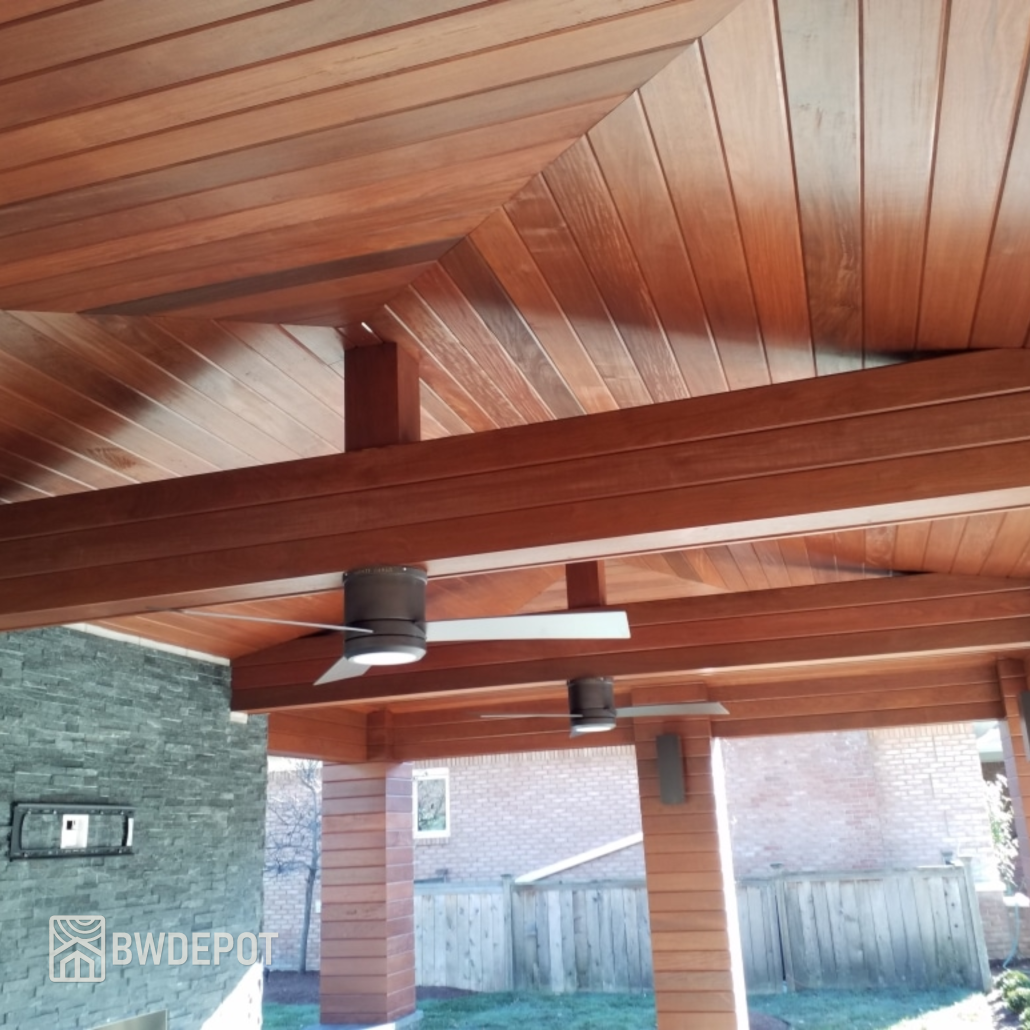
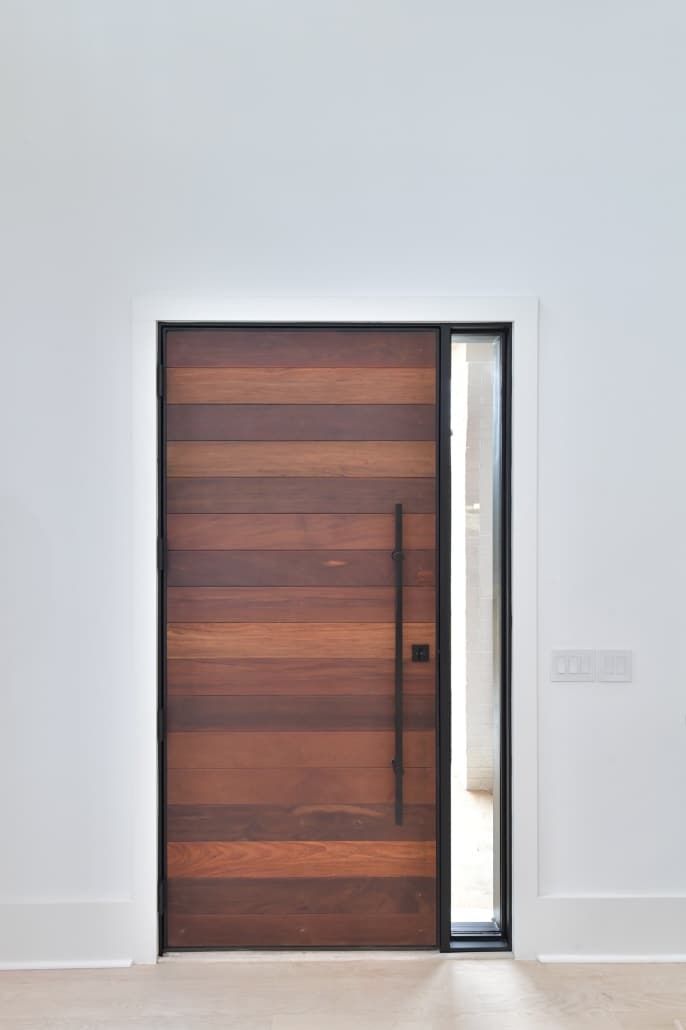
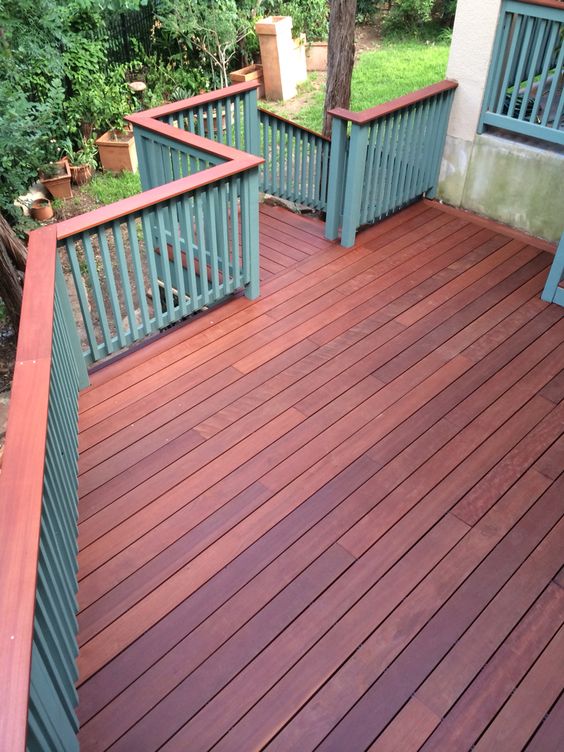
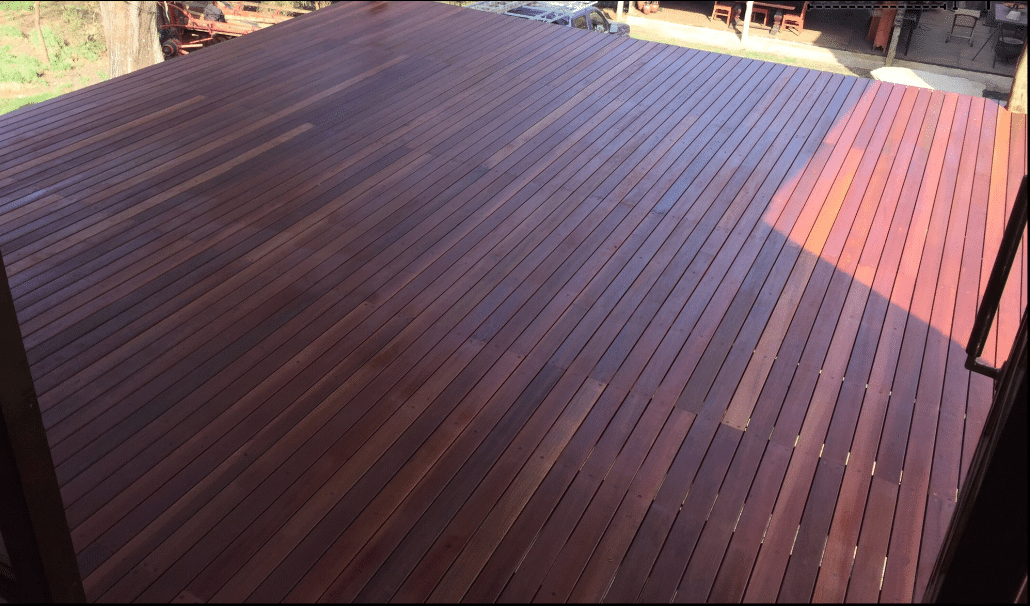
Massaranduba ranges from deep brick-red to rich reddish-brown tones, creating a façade that feels bold, warm, and substantial. Compared to Ipe, it typically presents a more uniform color profile without olive undertones or dramatic board-to-board brown variation.
The grain pattern is generally tight and consistent, with less cathedral striping and fewer high-contrast elements than Tigerwood or some lots of Ipe. The result is a cohesive, saturated red-brown wall appearance across large elevations.
Over time, exposure to sunlight will gradually soften the red tones and shift the surface toward a weathered brown-gray patina. This change is cosmetic only and does not affect structural integrity. To maintain its original depth of color, periodic application of a UV-protective hardwood oil can slow the natural silvering process.
Massaranduba Siding: Technical Specs & How It Compares
Massaranduba siding is chosen for its deep red-brown tone and heavy, durable structure in exterior cladding. Its standout advantage is high density + strong natural durability, which supports long-term exterior performance in a properly ventilated rainscreen wall. (Like any dense hardwood, it performs best when detailed with true airflow behind the boards.)
Want the full data sheet and wood-science breakdown? See: Massaranduba (Bulletwood) at The Wood Database.
Bottom line: If you want a hardwood known for deep red-brown color, high density, and long-term exterior durability in ventilated cladding, Massaranduba siding is a heavy-duty, high-performance option.
Massaranduba vs Ipe
- Hardness: Both are extremely dense hardwoods; Massaranduba reaches ~3,100+ Janka.
- Color: Ipe shows wider brown variation with reds and olive tones; Massaranduba runs more consistently red-brown.
- Wall appearance: Massaranduba often produces more uniform elevations across large façades.
- Best for: Massaranduba for consistent rich hardwood tone; Ipe for classic premium benchmark.
Massaranduba vs Cumaru
- Color: Cumaru ranges gold → red → brown; Massaranduba stays deep red-brown.
- Consistency: Massaranduba creates smoother wall uniformity across large elevations.
- Hardness: Both are very dense hardwoods; Massaranduba reaches ~3,100+ Janka.
- Best for: Massaranduba for cohesive architectural color; Cumaru for bold natural variation.
Massaranduba vs Garapa
- Color: Garapa trends golden to honey; Massaranduba trends deep red-brown.
- Visual impact: Garapa reads bright and modern; Massaranduba reads bold and substantial.
- Density: Massaranduba is significantly heavier and harder.
- Best for: Massaranduba for rich saturated walls; Garapa for light modern façades.
Massaranduba vs Tigerwood
- Pattern: Tigerwood shows bold striping; Massaranduba grain is tighter and more consistent.
- Color: Tigerwood mixes orange and brown contrast; Massaranduba stays deep red-brown.
- Hardness: Massaranduba ranks among the hardest exterior hardwoods used in siding.
- Best for: Massaranduba for uniform architectural walls; Tigerwood for statement striping.
Massaranduba vs Brown Balau
- Hardness: Massaranduba reaches ~3,100+ Janka, making it significantly harder.
- Color: Brown Balau stays brown-neutral; Massaranduba trends red-brown.
- Wall appearance: Massaranduba often delivers very uniform color across boards.
- Best for: Massaranduba for dense, uniform red-brown façades; Brown Balau for Ipe-style brown tone.