
What Does Grade A Ipe Decking Actually Look Like?

That’s exactly why we created this guide.
In this article, we’ll show real-world photos of Grade A and Grade B Ipe decking, explain what premium hardwood decking should realistically look like, and help you understand the difference between natural hardwood character and true defects.
What Do Terms Like FAS, FEQ, Grade A, and Premium Grade Ipe Mean?
If you spend enough time researching Ipe decking, you’ll quickly encounter a wide range of grading terminology and marketing language.
FAS
FEQ
Grade A
Premium Grade
FEQ Clear
Architectural Grade
Flooring Grade
Clear Grade
Not all “Premium Grade” Ipe decking is sorted to the exact same visual standard.
There’s not even agreement on what the acronyms stand for. For instance, is FAS “First and Seconds” or “First and Select”? IS FEQ “First European Quality” or “First Export Quality”? I asked two separate Ipe importers (two of the heaviest importers for over the last 20 years), and they had different answers.
That’s why understanding the expectations behind the terminology matters more than simply chasing the fanciest grading label online.
One of the largest and most respected Ipe importers in the United States, McIlvain Lumber, openly acknowledges this same issue on their own website — specifically stating that there is “no standardized grading system” for Ipe decking and that appearance tolerances can vary significantly from mill to mill.
Is There an Official Grading Standard for Ipe Decking?
One of the biggest misconceptions in the Ipe decking industry is that there’s a universal organization strictly defining what qualifies as “Grade A” or “Premium Grade.”
There isn’t.
Pine and Cedar products are supported by substantiated and accredited grading organizations that clearly define how these woods are classified and evaluated — including agencies such as the SPIB (Southern Pine Inspection Bureau) and the WWPA (Western Wood Products Association).
Alternatively, Ipe decking does not have a single universally enforced appearance grading rulebook. Even when suppliers use the exact same terminology — such as “Premium Grade” or “Grade A” — acceptable appearance tolerances can still vary substantially from mill to mill.
Sapwood
Pinholes
Grain Variation
Mineral Streaking
Checking
Knots
Filler
Overall Appearance
That means one company’s “Premium Grade Ipe decking” may look noticeably different from another’s — even if both are technically selling high-end material.
Industry Reality Check: Even McIlvain Lumber — one of the largest and most respected hardwood importers in the United States — openly states that there is “no standardized grading system” for Ipe decking and that appearance variation exists throughout the supply chain.
What Does Premium Grade or Grade A Ipe Decking Actually Look Like?
This is where customer expectations often become unrealistic.
When many people hear terms like “Premium Grade” or “Grade A Ipe decking,” they imagine perfectly identical boards with zero variation, zero character, and absolutely no natural imperfections.
That’s not how Ipe Decking works. You may see boards that meet this qualification in “Furniture Grade Ipe.” Even Ipe Flooring is remarkably near-perfect, but the occasional imperfection is not unheard of… and we should know- we’ve imported, handled, distributed, and even installed (in our own homes) the highest grades of Ipe Flooring and Decking for over twenty years.
To be ultimately clear, Grade A/Premium Ipe Decking has NEVER been and should not be expected to meet the same standards as Ipe Interior Flooring. This should not be up for debate or discussion.
So, how would we define Premium/Grade A/FAS/FEQ in the most honest and transparent way?
Mostly Clear Faces
Minimal Sapwood
Minimal Knots
Minimal Instances of Filler
Minimal Instances of “Rough Grain”
Limited Borer Holes (particularly those that fully penetrate the board)
But even top-tier Premium Grade Ipe decking can still contain:
Natural Color Variation
Mineral Streaking
Occasional Pinholes
Minor Checking
Natural Grain Variation
Mill Chatter
Grain Redirection
Occasional Rough Surface
Click to expand: Honest, transparent images of Grade A / Premium / FAS / FEQ Ipe decking.
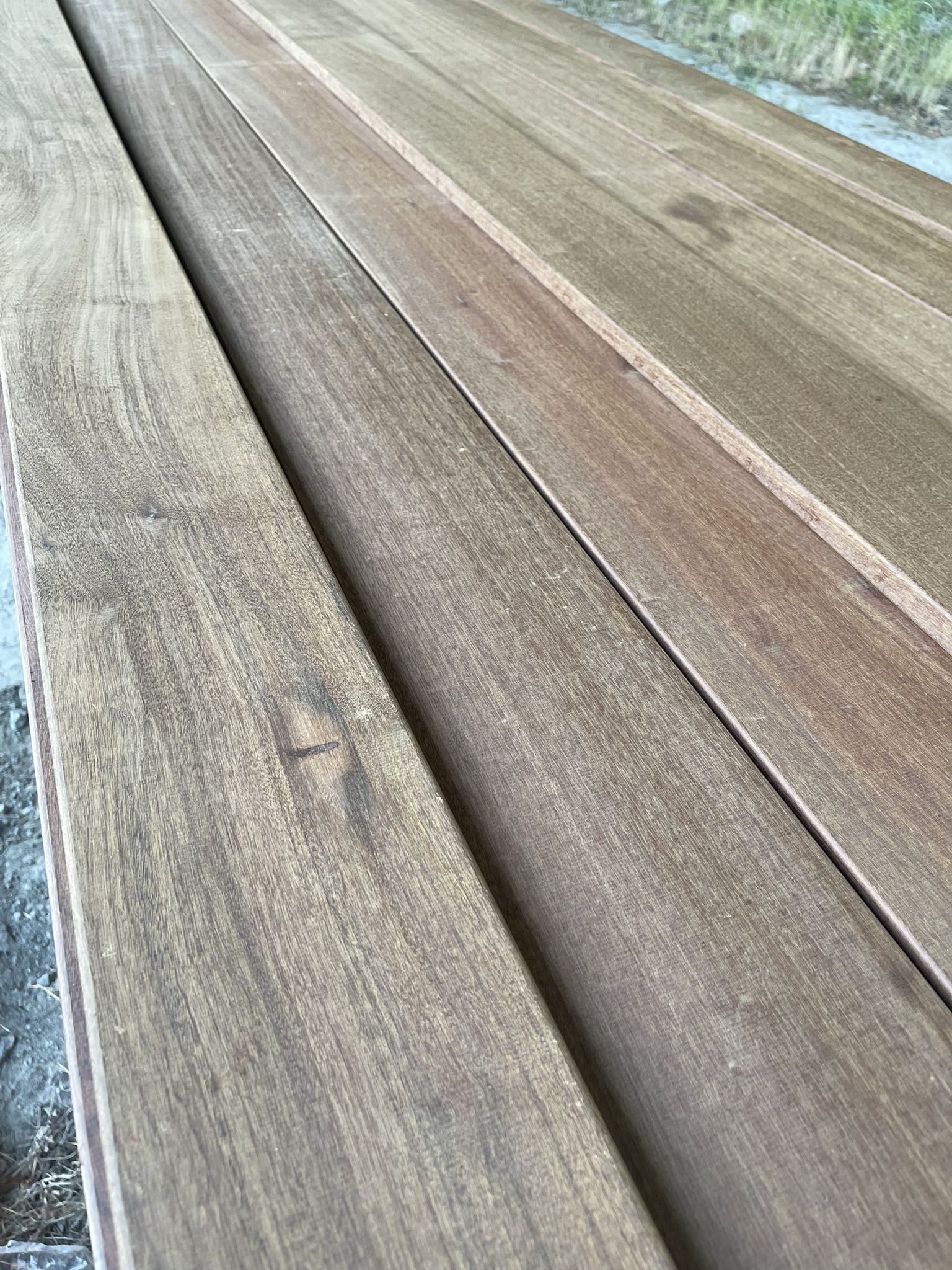
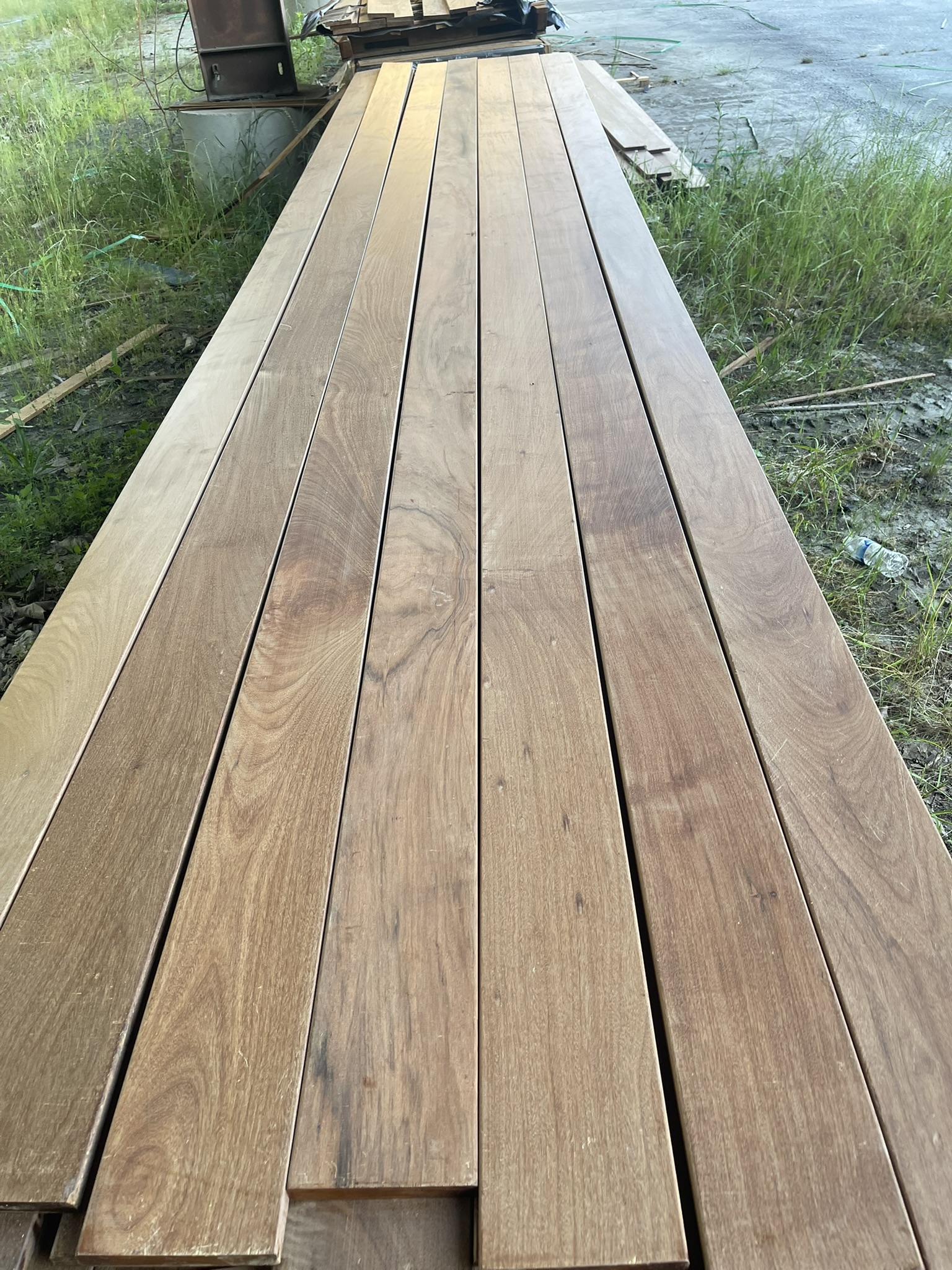
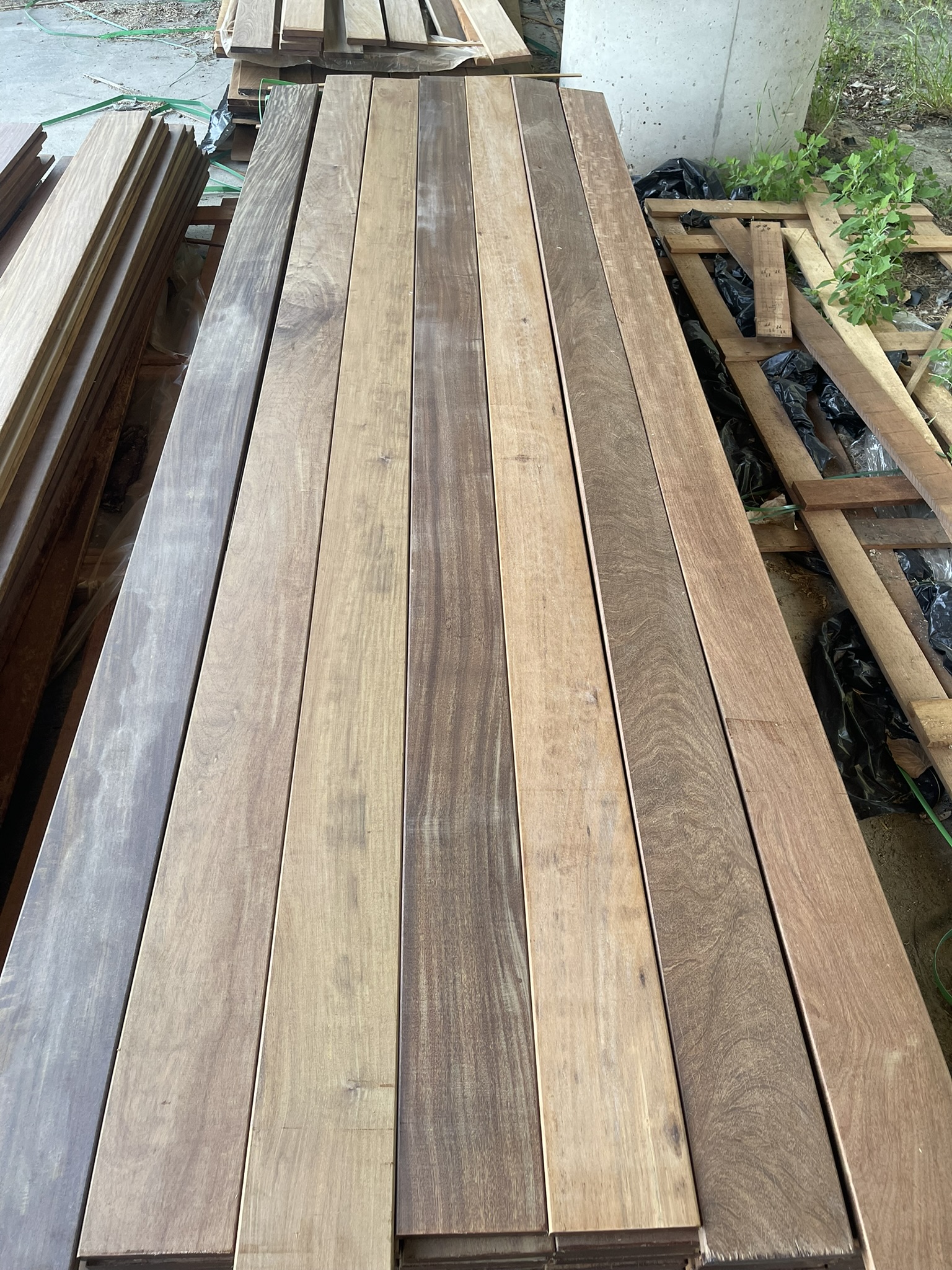
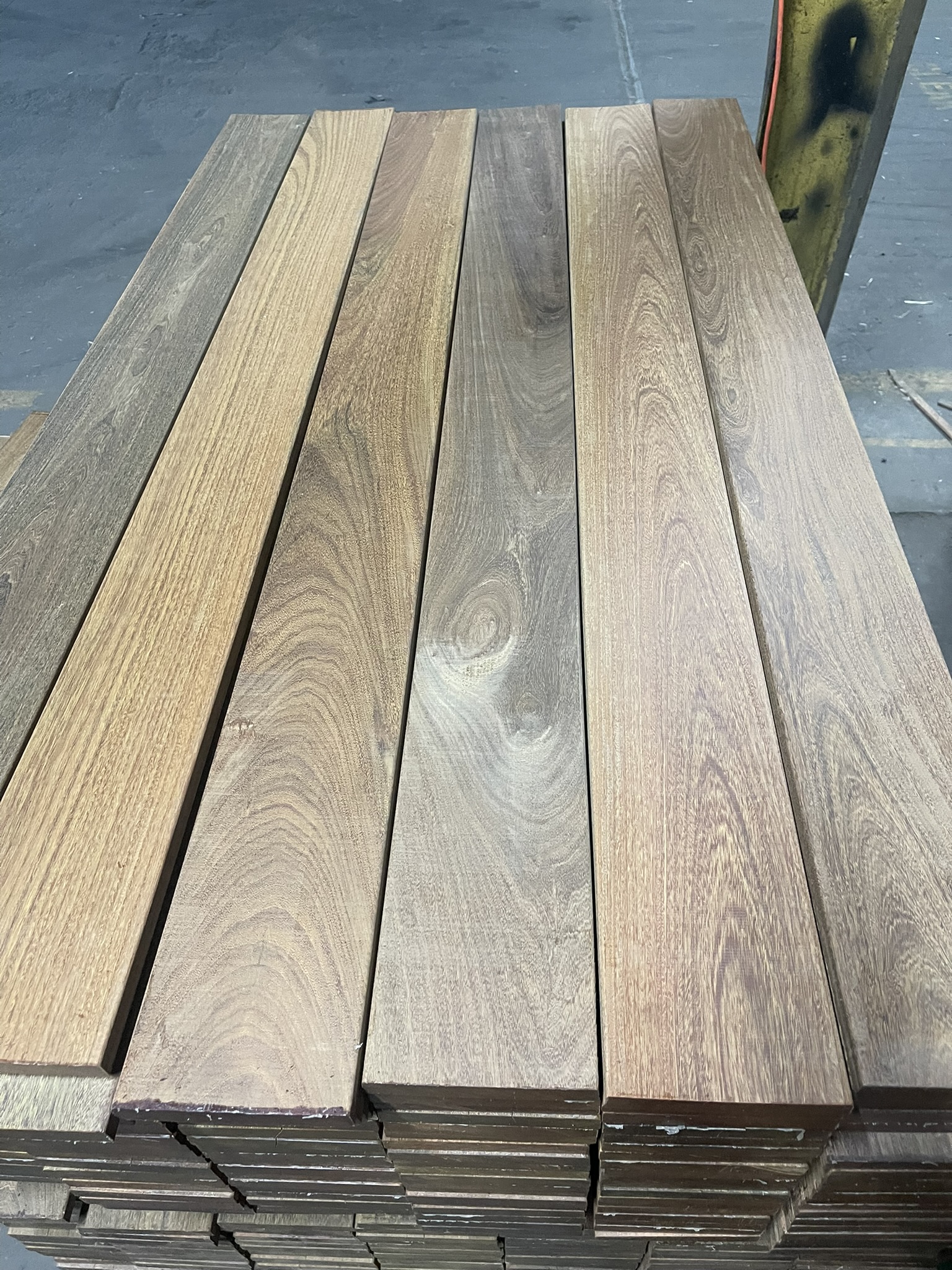
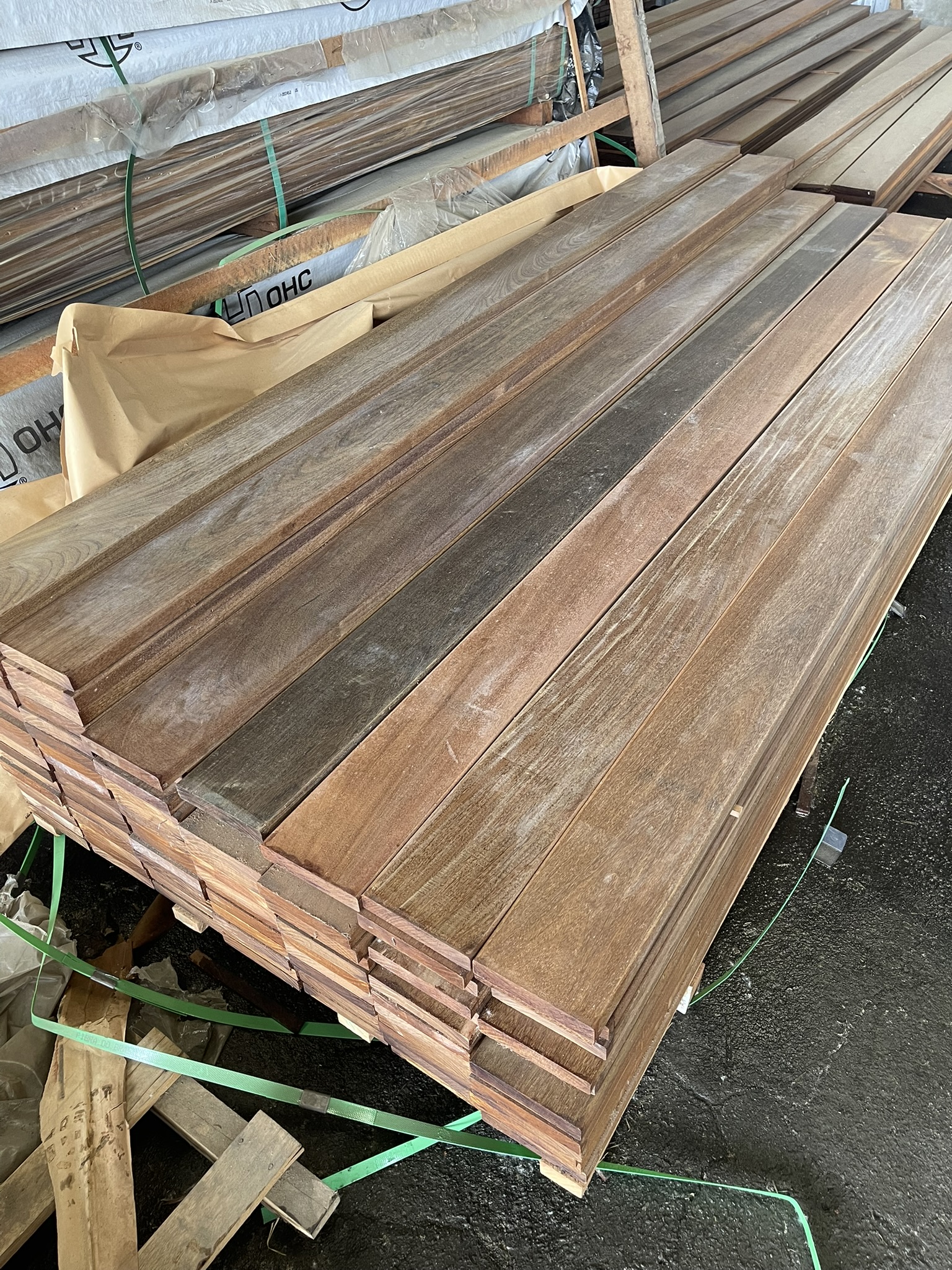
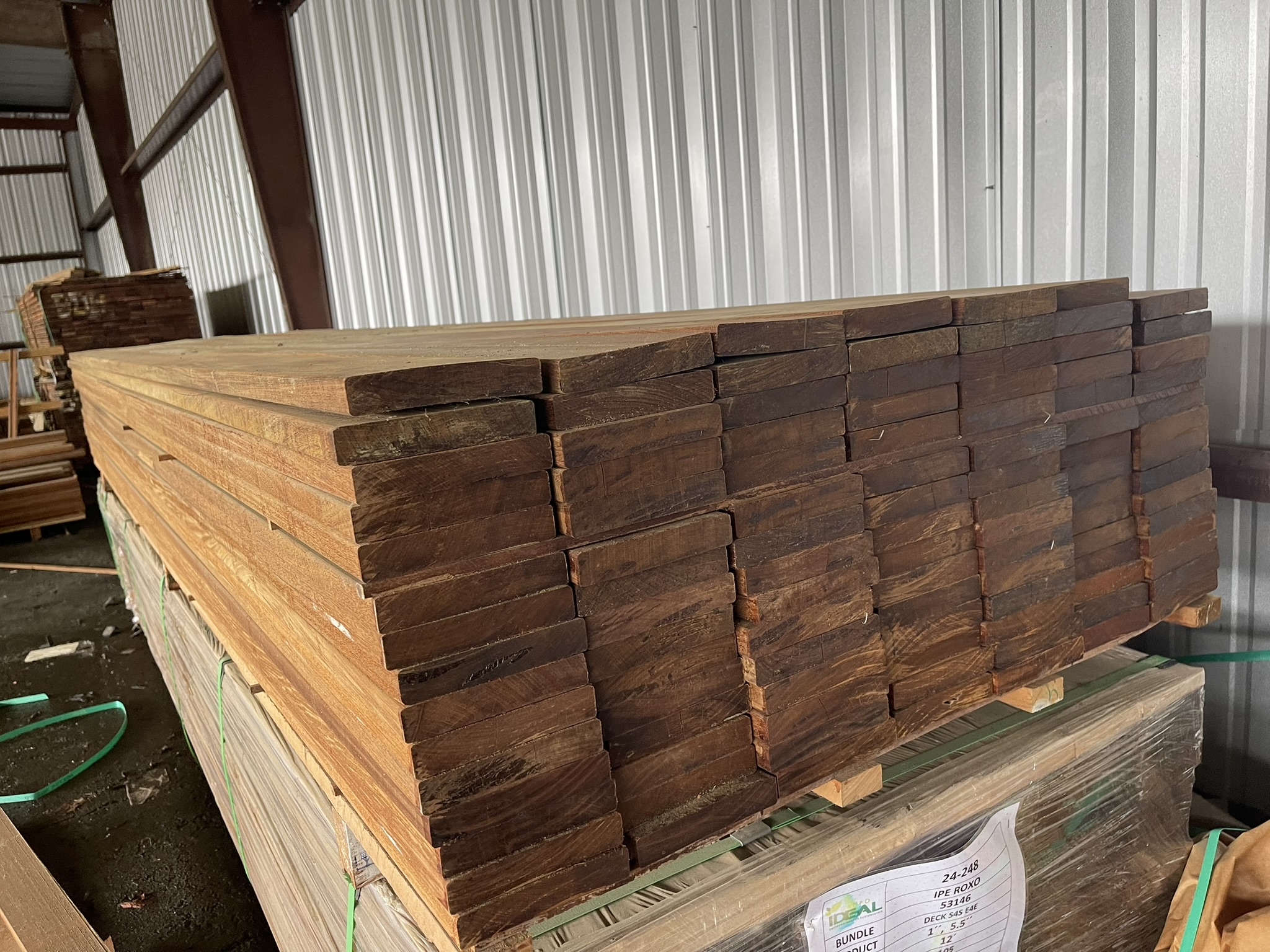
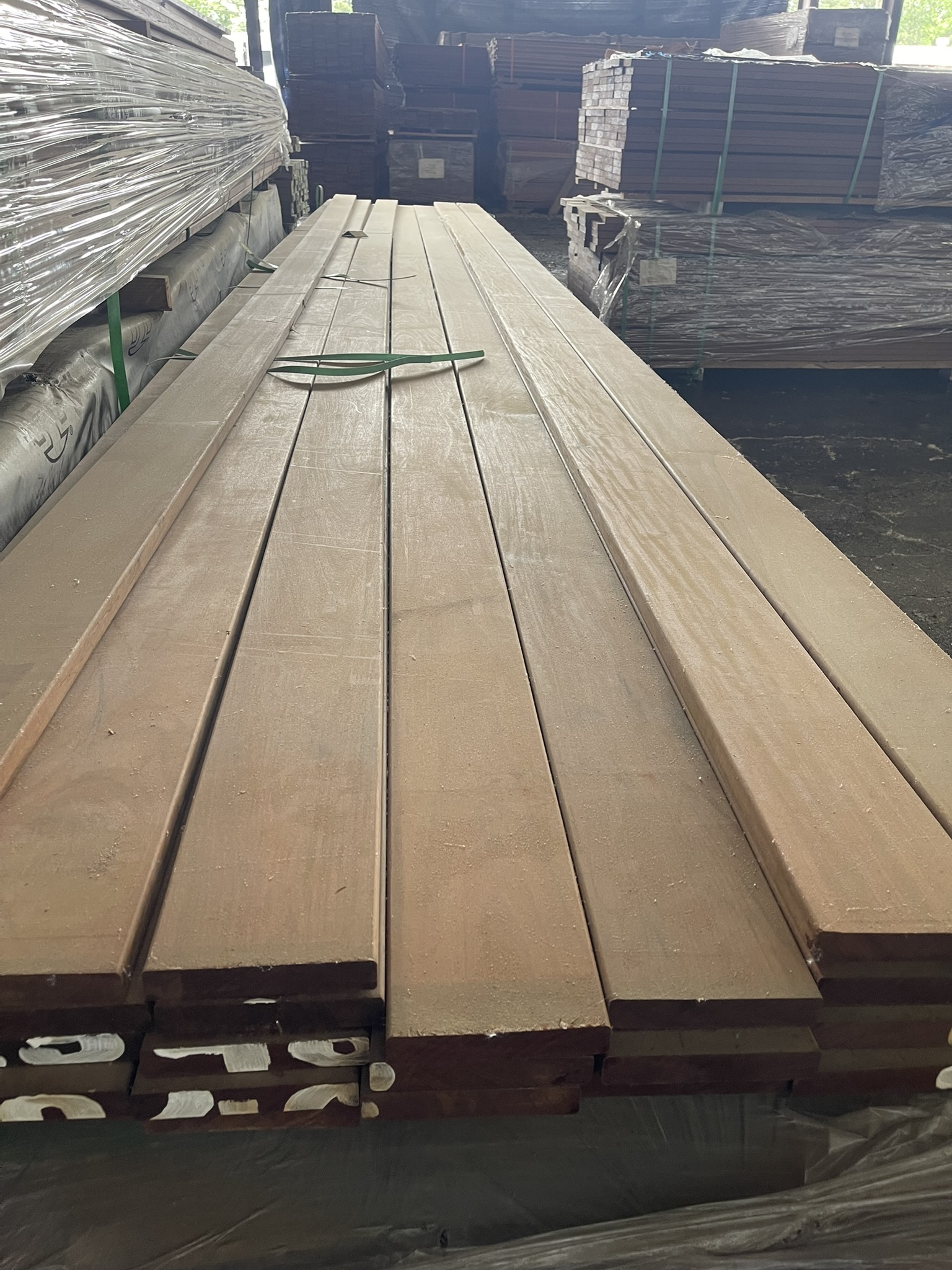
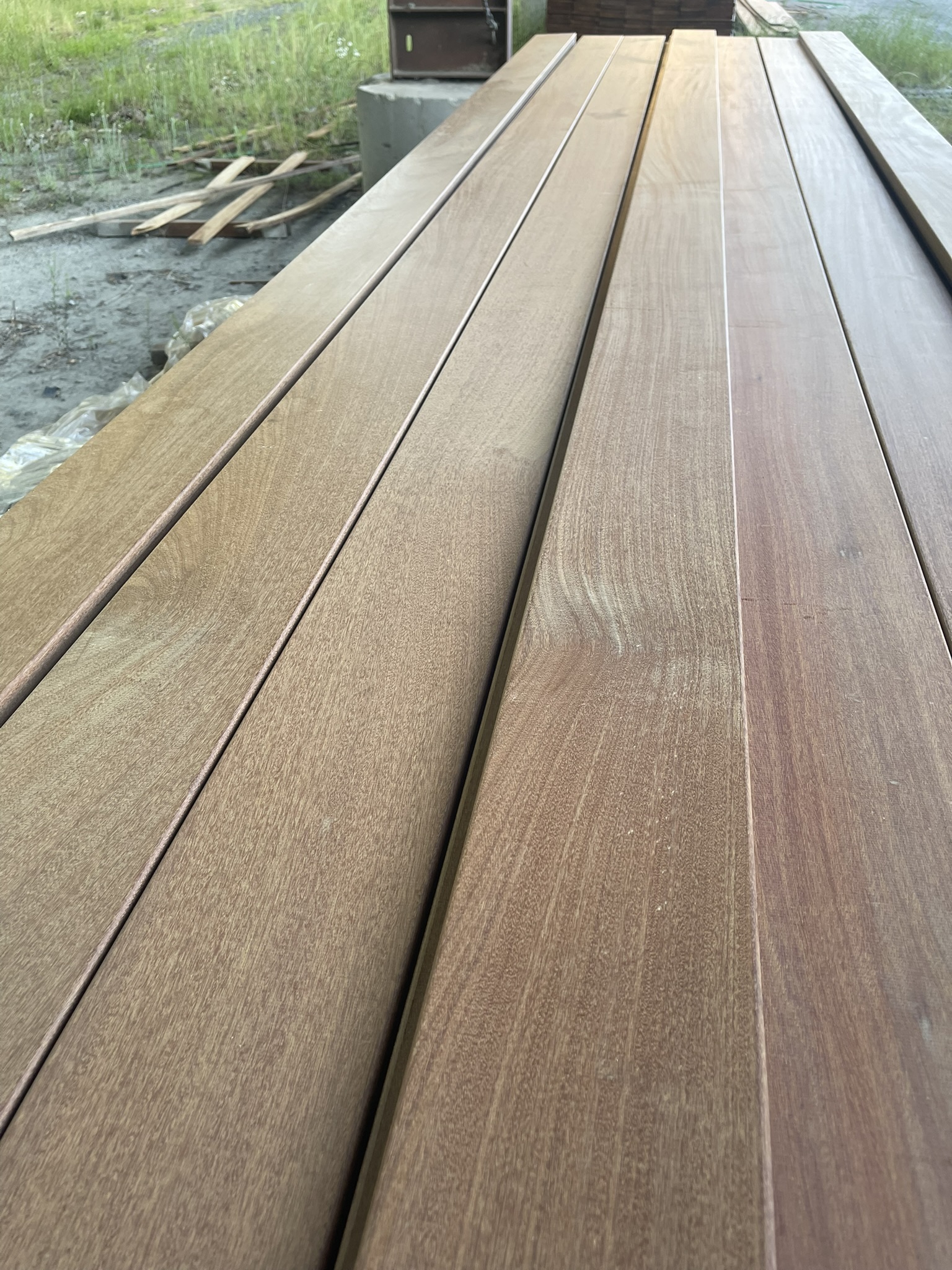
Notice that some natural characteristics may still appear, but in Grade A / Premium Ipe decking, these instances are typically minimal, isolated, and balanced within the overall appearance of the bundle.
Industry Reality Check: Even suppliers who openly discuss grading standards acknowledge that Premium Grade Ipe is not intended to be furniture-grade perfection. Exterior hardwood decking is sorted for durability, usability, and overall appearance — not flawless visual uniformity.
Helpful Tip: When evaluating Ipe decking online, focus less on finding perfectly identical boards and more on understanding what realistic premium hardwood tolerances actually look like in real-world exterior applications.
What Is the Difference Between Grade A and Grade B Ipe?
The difference between Grade A Ipe decking and Grade B Ipe decking is primarily about frequency and consistency — not whether the wood itself is structurally “good” or “bad.”
In reality, many of the exact same natural characteristics occasionally found in Premium Grade Ipe decking are simply expected to appear much more consistently throughout a Grade B package.
Grade A or Premium Grade Ipe is generally sorted for:
Cleaner Faces
No Sapwood
Smaller Knots (where present)
Straighter Grain
Grade B material often contains these same characteristics more regularly throughout the load:
Sapwood Present
Larger Knots that may Penetrate
More Pinholes (Some That Penetrate Fully)
More Grain Redirection
The Same Color Variation
More Character Marks
Surface Imperfections on Most or Every Board
That doesn’t automatically make Grade B undesirable.
Some customers actually prefer a more rustic or character-heavy appearance, while others prioritize maximizing yield from the log and lowering overall project cost.
Click to expand: images of Grade B / Fence-Grade Ipe Decking
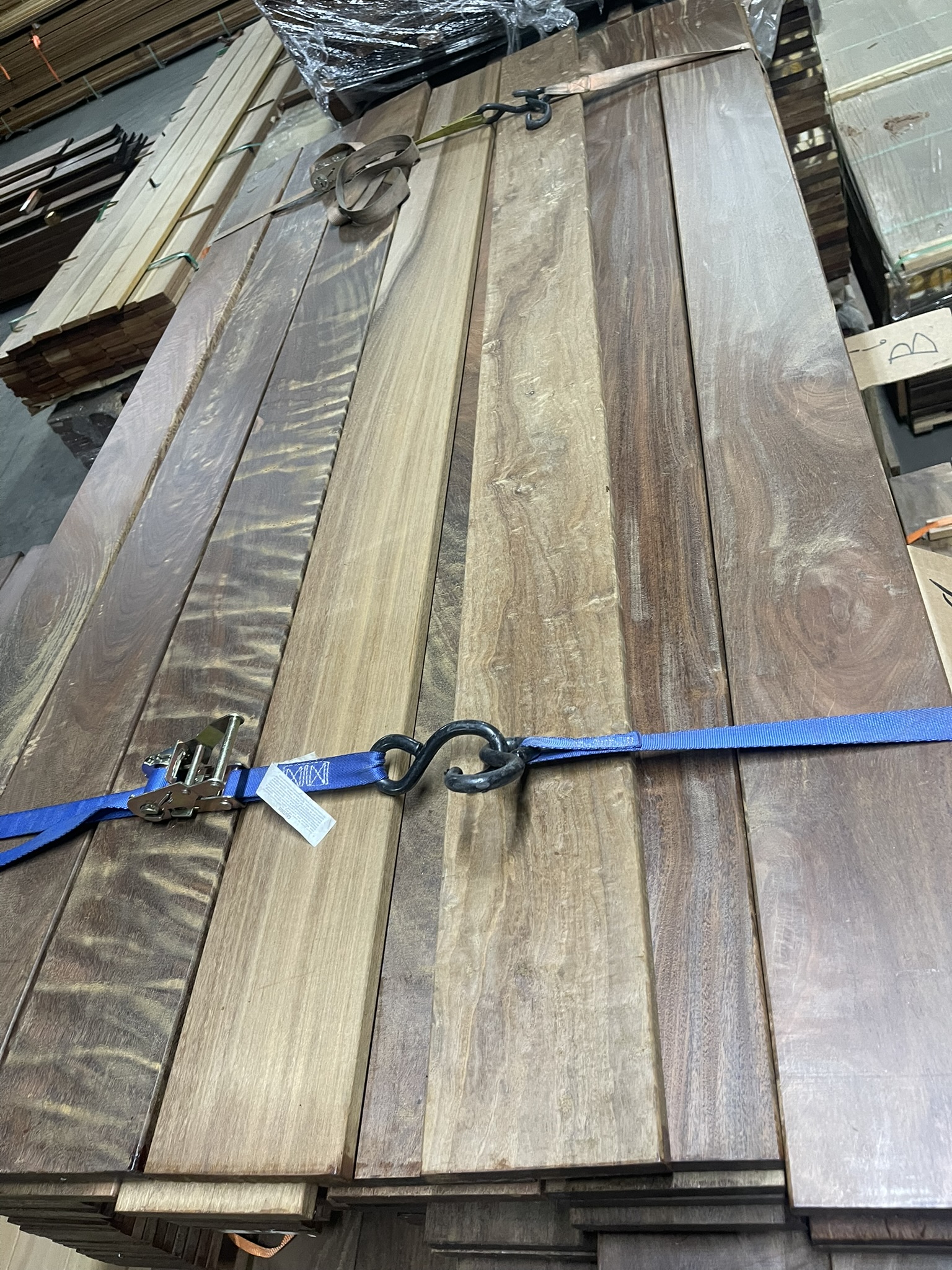
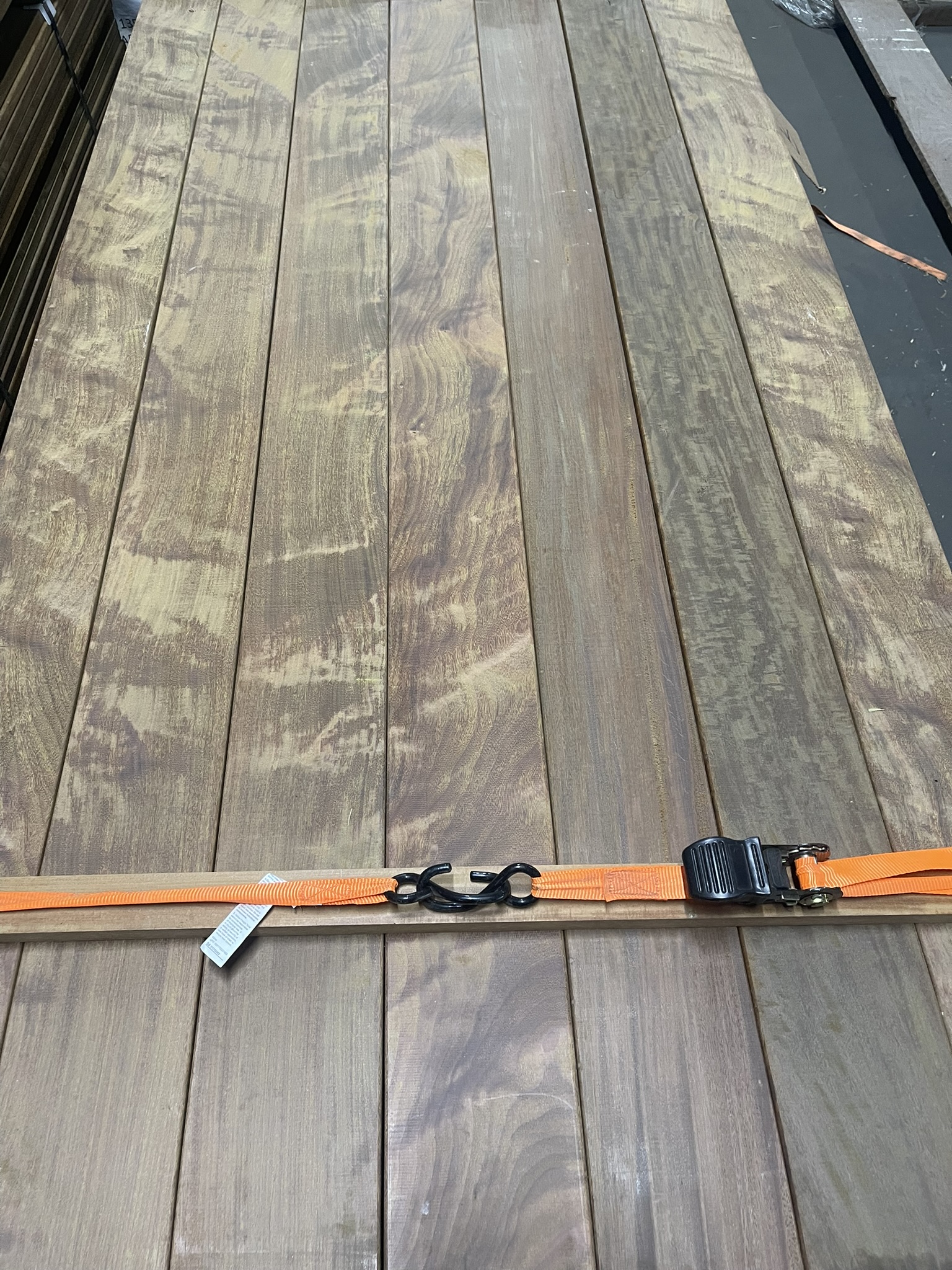
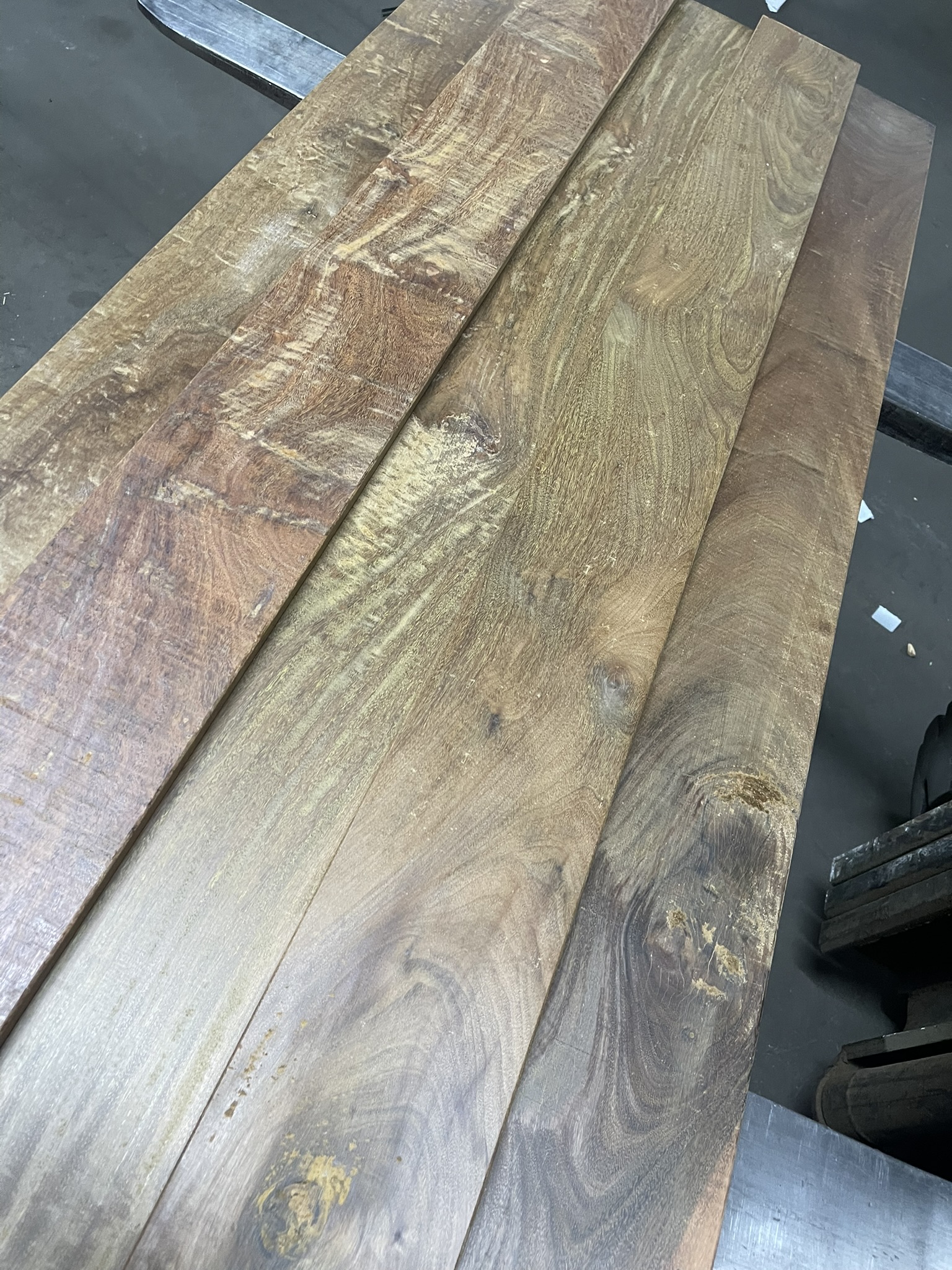
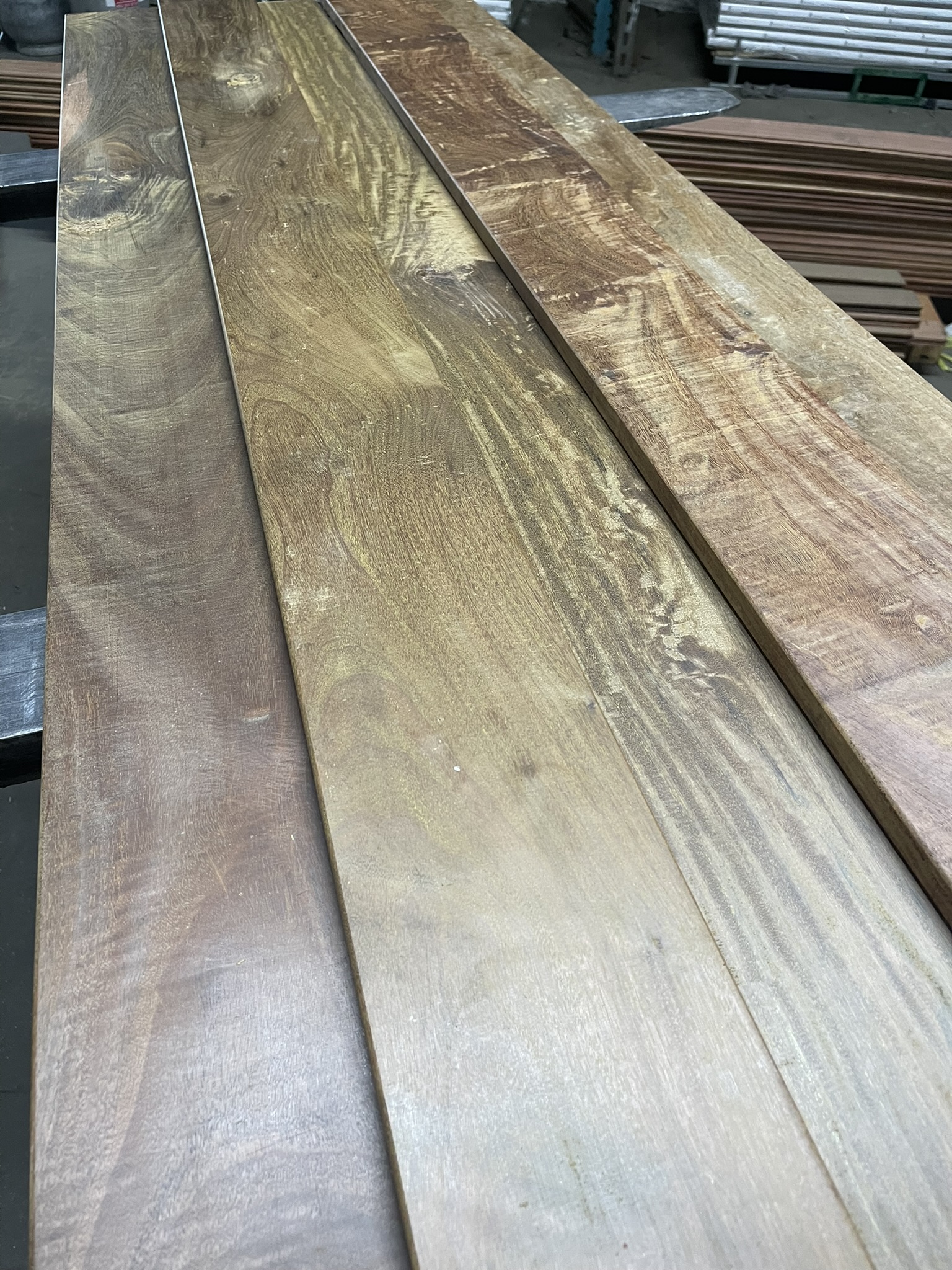
Notice that the natural characteristics are present in nearly every board. Some boards could certainly qualify for Grade A- a great example of how fluid and subjective Grading Ipe Decking can be.
Industry Reality Check: Separating Ipe into perfectly strict “A” and “B” categories is rarely as black-and-white as customers expect. Natural hardwood decking exists within a spectrum of variation, and mills often sort material differently depending on customer demand, production yield, and appearance expectations.
Want to See Real Examples? Our Recent Orders page and Decking Gallery show real-world examples of how natural hardwood variation appears across different projects and bundles.
What Natural Characteristics Are Normal in Ipe Decking?
One of the biggest misunderstandings in the world of Ipe decking is confusing natural hardwood character with actual lumber defects.
Real Premium Grade Ipe decking can still contain natural characteristics like:
Minor Color Variation
Mineral Streaking
Occasional Pinholes
Natural Grain Shifts
Minor Checking
Slight Mill Chatter
Occasional Rough Areas
These are often considered normal and acceptable within high-end exterior hardwood decking.
Actual grading concerns are usually more serious issues such as:
Excessive Sapwood
Large Unsound Knots
Major Structural Cracks
Severe Twist or Warp
Major Milling Defects
Industry Reality Check: Many showroom photos and online galleries unintentionally create the impression that Grade A Ipe decking should appear perfectly uniform and flawless. In reality, hardwood decking is still a natural exterior product — not a manufactured synthetic material.
For Example: Our Natural Hardwood Appearance & Grade Expectations and Straightness, Sweep, Bow & Movement policies explain how certain natural characteristics are considered acceptable within realistic premium hardwood decking tolerances.
Why Are Mixed Lengths Better for Ipe Decking?
Another extremely common question in the Ipe decking industry is:
“Can I get all 16-foot boards?”
While full-length boards are possible in some situations, mixed-length packages are often the more practical and realistic approach for Premium Grade Ipe decking.
That’s because Ipe decking is naturally produced in varying lengths as logs are processed and optimized for yield. Aggressively sorting for only long boards can increase waste, reduce availability, and significantly raise overall project cost.
Mixed lengths also provide several real-world advantages:
Better Layout Flexibility
Cleaner Seam Staggering
Lower Material Waste
Easier Future Repairs
Improved Shipping Reliability
More Natural Appearance
In fact, many experienced hardwood installers actually prefer random-length decking because it creates a more natural architectural appearance while improving installation flexibility and long-term practicality.
Industry Reality Check: Extremely long hardwood boards are harder to ship, harder to maneuver during installation, and often create more unusable cutoff waste around stairs, borders, breaker boards, and angled layouts. Mixed-length hardwood decking is usually the more efficient long-term solution overall.
Want More Detail? Our complete guide — Full-Length vs. Random-Length Ipe Deck Boards — covers additional advantages of mixed-length hardwood decking including shipping efficiency, installation difficulty, replacement flexibility, visual rhythm, seam placement, and long-term deck aesthetics.
Why Do Online Photos of Ipe Decking Look Different?
One reason customers sometimes become confused about Premium Grade Ipe decking is because hardwood can look dramatically different depending on the conditions in which it’s photographed.
Freshly Oiled Boards Look Richer
Wet Boards Show Deeper Contrast
Bright Sunlight Changes Color Perception
Shade Softens Grain Variation
Weathered Wood Looks Different Than Freshly Milled Wood
And of course, many online photos naturally showcase the very best lighting, angles, moisture levels, and board selections available.
That doesn’t necessarily mean the photos are misleading — but customers should understand that real hardwood decking changes appearance constantly depending on moisture, lighting, oil, weathering, and age.
This is especially true with Ipe decking, which naturally evolves in color as it acclimates and weathers over time.
Industry Reality Check: Freshly oiled Ipe, freshly rained-on Ipe, newly installed Ipe, weathered gray Ipe, and professionally photographed Ipe can all appear dramatically different online — even when they are the exact same species and grade.
Want to See How Ipe Actually Changes Over Time? Our guides on How Ipe Decking Weathers Over Time and Ipe Deck Maintenance & Care show real-world examples of how sunlight, oiling, moisture, and weather exposure influence the appearance of Ipe decking over time. :contentReference[oaicite:0]{index=0} :contentReference[oaicite:1]{index=1}
Can You See Photos of Your Ipe Decking Before It Ships?
At Brazilian Wood Depot, we believe transparency matters more than marketing terminology.
That’s why customers can request pre-shipment photos of their actual Ipe decking material after payment and while the lumber is actively being pulled for shipment.
Pre-shipment photos help customers:
Review Overall Appearance
Understand Natural Variation
Discuss Expectations Before Shipping
Better Visualize Grain & Color Range
Improve Communication Before Delivery
This level of transparency is still relatively uncommon in the Ipe decking industry, especially with long-distance freight shipments.
Industry Reality Check: Pre-shipment photos are intended to improve communication and expectation alignment — not guarantee that every individual board will appear perfectly identical under every lighting condition or after acclimation, oiling, or weather exposure.
For Example: Our Pre-Shipment Photos & Transparency Policy explains how project photos are used to improve customer communication while still recognizing the natural variation inherent to real hardwood decking.
You can also browse our Recent Orders page to see examples of real bundles and outbound hardwood shipments.


