
Easing the Ends: One Small Detail That Takes Ipe Decking to the Next Level
One of the most overlooked details in Ipe Decking installation is also one of the easiest ways to create a cleaner, more high-end finished appearance. Professional installers often ease the cut ends of deck boards to help the entire deck surface feel more intentional, refined, and visually cohesive — especially when working with mixed-length Ipe deck boards.
This simple finishing detail helps:
- Make butt joints look softer and more intentional
- Hide slight lifting or unevenness at board corners
- Highlight the natural variation and character of real hardwood decking
- Reduce sharp edges that can catch bare feet, clothing, or furniture covers

Why Sharp Square-Cut Ends Stand Out on Ipe Decking
Most factory-milled Ipe Decking boards already include a subtle eased edge along the sides of the board. Once boards are cut during installation, however, those fresh cut ends become much sharper and more visually noticeable — especially at butt joints.
Lightly easing board ends helps seams appear softer, cleaner, and more intentional throughout the deck.
Rounded transitions help boards blend together more naturally and reduce harsh visual breaks.
Eased joints complement the staggered appearance and authentic variation found in real hardwood decking.
This detail becomes even more important when working with mixed-length deck boards, where staggered joints are intentionally used to create a more natural hardwood layout. When properly eased, these transitions feel more refined and architectural instead of overly segmented or repetitive.
Mixed-length layouts can also simplify future repairs by allowing smaller affected sections to be replaced more practically instead of replacing an entire long board. Additional information regarding replacement footage considerations can be found in our: Purchase Policy – Full-Length Boards, Replacement Footage & Damage Limitations.
How Easing the Ends Improves the Overall Appearance
One of the biggest visual advantages of easing deck board ends is how much more intentional and refined the entire deck surface begins to feel. Instead of hard transitions at every butt joint, softened edges help neighboring boards visually blend together more naturally.
Rounded edges reduce abrupt visual breaks between boards and help seams feel more integrated into the layout.
Minor corner lift, slight alignment variation, or natural hardwood movement become less visually distracting when edges are softened.
Softened edges create gentler shadow lines and smoother light transitions across the deck surface.
Even with extremely precise milling, real hardwood boards naturally shrink to slightly different finished widths over time.
This becomes especially effective on larger decks using mixed-length hardwood deck boards, where staggered layouts naturally create more visual rhythm across the surface. Rather than drawing attention to every seam, eased transitions help emphasize the rich variation, movement, and authentic character that make real hardwood decking so desirable.
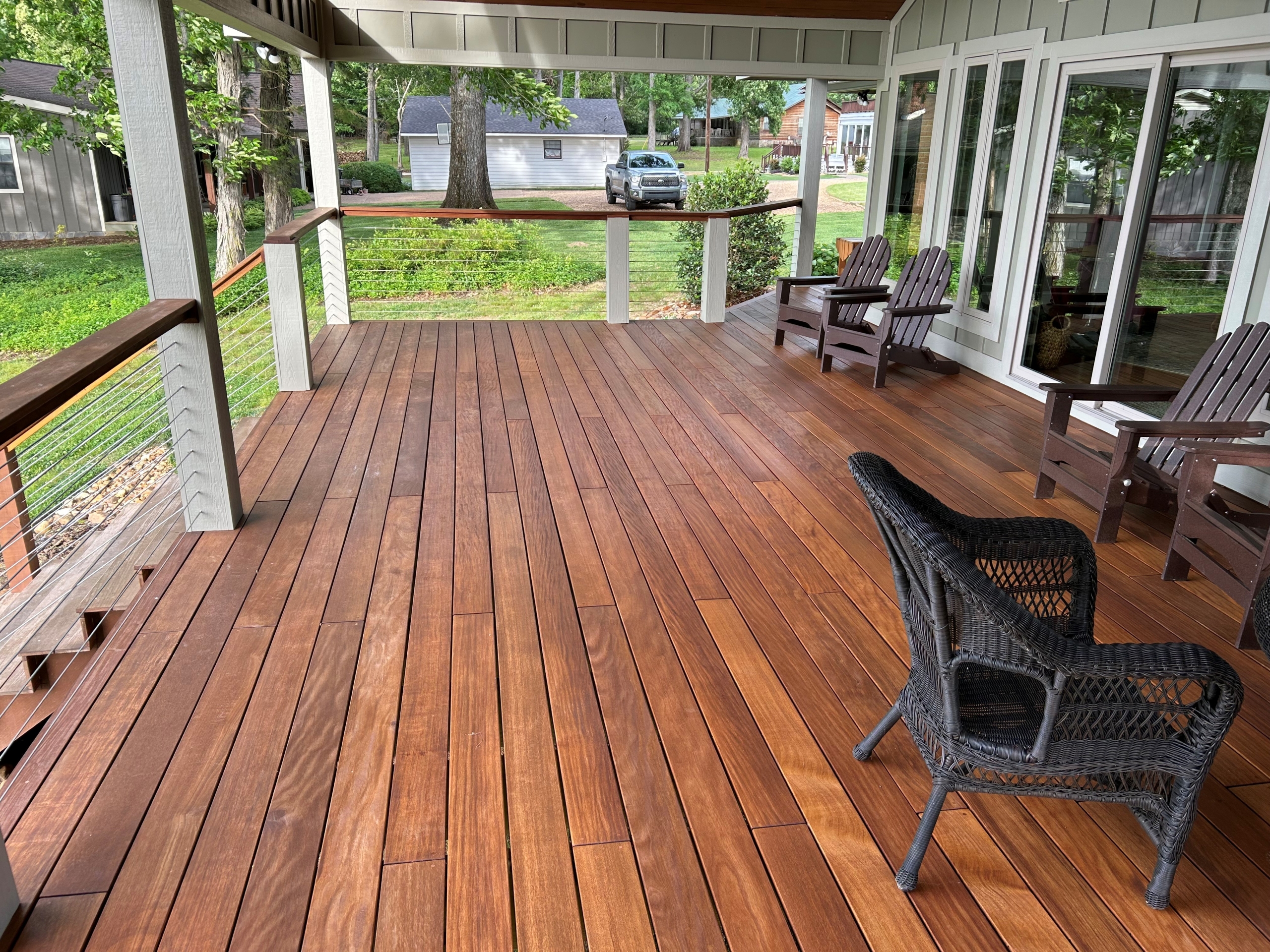
Real-World Example: This customer did an exceptional job combining several professional hardwood decking techniques into one clean installation. The deck features beautifully installed Brown Balau Decking using the CAMO Edge Fastening System, while intelligently using Pro Plugs at board ends and butt joints — exactly as we often recommend to help prevent corner blow-out and splitting near the ends of dense hardwood boards.
Most importantly, notice how well the installer handled the board spacing and eased board ends. The softened transitions and slight joint gaps help disguise natural width variation while creating a cleaner, more intentional overall appearance throughout the deck surface. Tip: Click the image to expand and study the butt-joint detailing more closely.
Additional Practical Benefits Beyond Appearance
While easing board ends is primarily done for appearance, it also improves the overall comfort, feel, and long-term usability of the deck itself. Even a subtle eased edge can make the surface feel smoother and more finished during everyday use.
Softened edges feel smoother under bare feet and reduce the harsh feel of sharp square-cut corners.
Rounded board ends are less likely to catch socks, clothing, furniture covers, or cleaning tools.
Minor expansion, contraction, or natural hardwood movement tends to appear less abrupt when edges are eased rather than left perfectly square.
Another overlooked benefit is overall consistency. Since most hardwood decking boards already include eased factory edges along the sides, lightly softening freshly cut ends helps maintain a more uniform profile across the entire installation rather than leaving cut joints visually harsher than the surrounding boards.
Combined with thoughtful staggering and mixed-length deck layouts, easing the ends helps create a deck surface that feels more custom, more architectural, and more aligned with the craftsmanship expectations typically associated with premium hardwood installations.
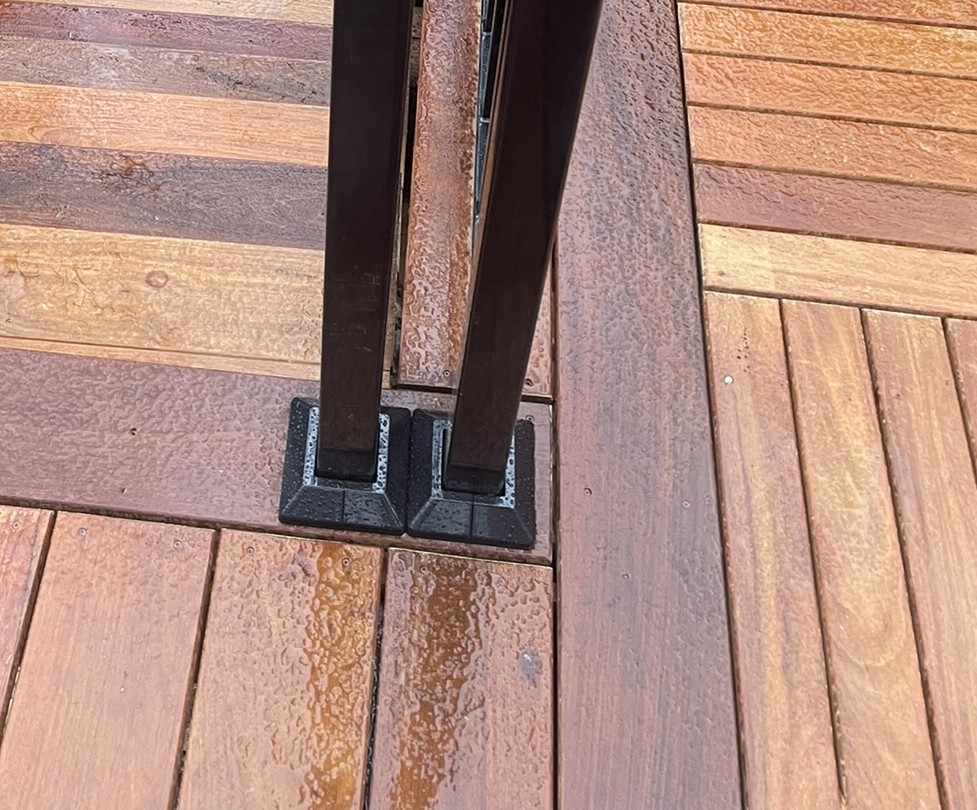
Transition Details Matter: This installation is another excellent example of how properly eased board ends help complex hardwood deck layouts feel cleaner and more intentional. Here, Bottom-Grooved Ipe Decking transitions around a section of Garapa Deck Tiles and adjacent stair detailing with beautifully softened board ends throughout the layout.
Notice how the eased transitions help the directional changes and surrounding cuts feel smoother and less abrupt — especially around the perimeter of the deck tiles and stair area. Small finishing details like these become even more important on intricate layouts where multiple board directions and transitions meet together.
This project is also featured in our article: Re-Decking Over an Under-Deck Drainage System with Hardwood Deck Tiles, where Sam explains how the deck tile section helped address moisture and cupping concerns above an under-deck drainage system. Tip: Click the image to expand and study the rounded transitions and stair detailing more closely.
The Two Most Common Ways to Ease Ipe Deck Board Ends
Professional installers typically use one of two methods to ease the ends of Ipe Decking boards: a quick pass with a random orbital sander or a small round-over router bit. Both approaches are effective and designed to soften the sharp square edge left behind after cutting the board.
- Most common method for easing hardwood deck boards
- Usually performed with 60-grit sandpaper
- Quick, forgiving, and easy to blend naturally
- Excellent for mixed-length deck layouts
- Creates a more uniform edge profile
- Popular on highly detailed or luxury projects
- Produces a cleaner architectural appearance
- Ideal for installers seeking maximum consistency
When combined with proper staggering and mixed-length Ipe deck boards, this small finishing detail can dramatically improve the final appearance of the installation while preserving the natural character and variation that make real hardwood decking so desirable.
For additional information on why mixed-length decking boards are often preferred over all full-length layouts, visit: Full-Length vs. Random-Length Ipe Deck Boards.
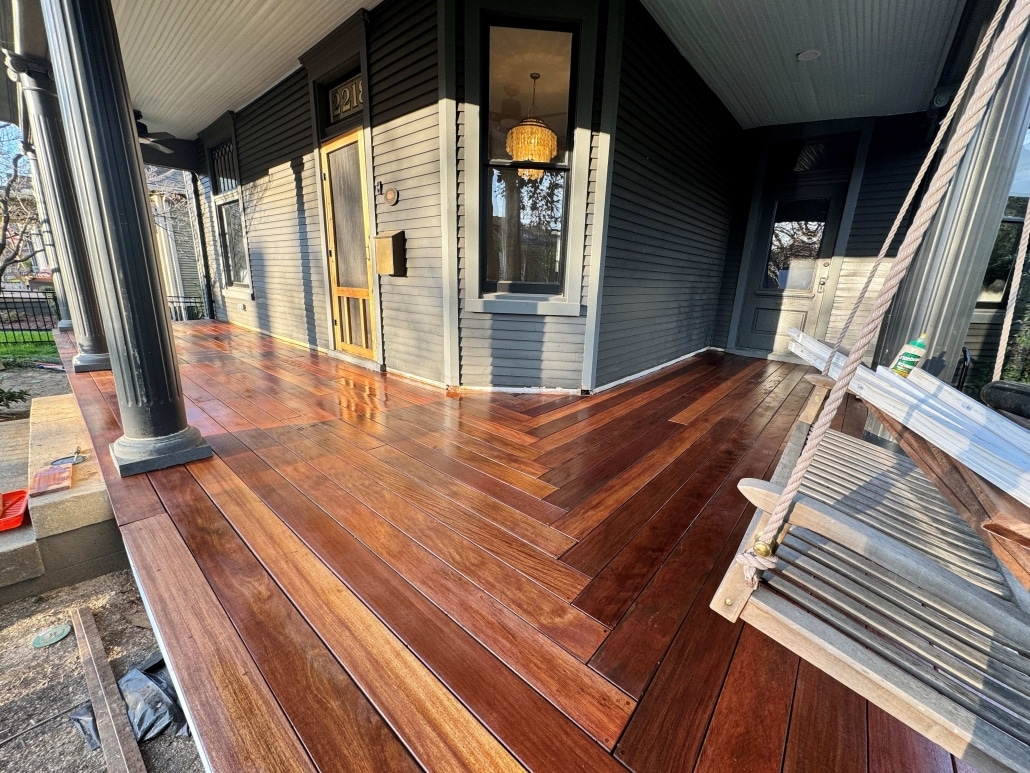
Another Excellent Example: This covered porch installation showcases how thoughtful finishing details can dramatically elevate the appearance of Brown Balau Decking. Notice how the installer carefully softened the board ends at directional changes and corner transitions, helping the layout feel cleaner, smoother, and more architectural overall.
This project also demonstrates a smart combination of the CAMO Edge Fastening System with selectively placed Pro Plugs near board ends and transition areas — a technique we frequently recommend on dense hardwood decking to improve both appearance and long-term durability.
Most importantly, notice how the installer used slight spacing and eased transitions together to help the staggered layout feel intentional rather than overly segmented. Small details like these often separate an average hardwood deck from one that feels truly custom. Tip: Click the image to expand and study the corner transition detailing more closely.
Final Takeaway
The best-looking hardwood decks are usually defined by small finishing details that work together to create a cleaner, more intentional overall appearance. Easing the ends of Ipe Decking boards is one of those details.
Softened board ends help butt joints feel more refined and less visually abrupt.
Eased transitions help staggered board layouts appear more natural and architectural.
Rounded edges create a smoother, more comfortable finished deck surface overall.
This approach becomes even more effective when paired with mixed-length Ipe deck boards, which often provide better layout flexibility, reduced waste, easier installation, and more practical long-term repairs compared to all full-length layouts.
To learn more about why mixed lengths are often preferred, visit: Full-Length vs. Random-Length Ipe Deck Boards.
Deeper Resources for Species Selection, Installation, and Performance
Project-Specific Guidance
- Decking Wizard – Generate a personalized, condition-based hardwood and fastener recommendation in minutes.
- MyQuote Interactive Resource – A practical reference covering shipping, installation expectations, policies, and common project questions.
Fasteners & Installation Methods
- Surface Screw Certified – The most secure and forgiving fastening method for exterior hardwoods.
- BWD Clip Certified – Hidden fastening guidance for grooved decking boards.
- CAMO Certified – Edge fastening best practices and limitations.
- Installation Guides Hub – Step-by-step multimedia guides for every major hardwood application.
Species-Specific Decking Resources
 https://www.bwdepot.com/wp-content/uploads/2026/05/44f54369-24a1-400e-b863-5669b198eecd.png 1024 1536 Sam https://www.bwdepot.com/wp-content/uploads/2025/11/brazilian-wood-depot-logo-300x52.webp Sam2026-05-15 15:20:132026-05-15 15:25:40What is Grade A Ipe Decking? https://www.bwdepot.com/wp-content/uploads/2026/05/ChatGPT-Image-May-15-2026-11_49_41-AM.png 1024 1535 Sam https://www.bwdepot.com/wp-content/uploads/2025/11/brazilian-wood-depot-logo-300x52.webp Sam2026-05-12 15:47:202026-05-29 14:15:15What Does “Mixed Length” Mean Exactly? https://www.bwdepot.com/wp-content/uploads/2026/05/b21a80fc-9524-4d9b-9469-ccf8439a7c22.png 1024 1536 Sam https://www.bwdepot.com/wp-content/uploads/2025/11/brazilian-wood-depot-logo-300x52.webp Sam2026-05-08 15:27:292026-05-16 01:22:43Easing the Ends: One Small Detail That Takes Ipe Decking to the Next Level https://www.bwdepot.com/wp-content/uploads/2026/03/48b07828-f305-40f0-85fd-34c567891680.png 1254 1254 Sam https://www.bwdepot.com/wp-content/uploads/2025/11/brazilian-wood-depot-logo-300x52.webp Sam2026-03-24 16:27:262026-05-15 16:10:43Best Hidden Fasteners for Ipe Decking: Clip Comparison Guide https://www.bwdepot.com/wp-content/uploads/2026/03/ChatGPT-Image-May-15-2026-12_13_53-PM.png 1254 1254 Sam https://www.bwdepot.com/wp-content/uploads/2025/11/brazilian-wood-depot-logo-300x52.webp Sam2026-03-19 13:28:362026-05-15 16:15:40Ipe Decking in 2026: Price, Alternatives, and What You Should Know Before You Build https://www.bwdepot.com/wp-content/uploads/2026/02/ChatGPT-Image-May-15-2026-12_20_30-PM.png 1254 1254 Sam https://www.bwdepot.com/wp-content/uploads/2025/11/brazilian-wood-depot-logo-300x52.webp Sam2026-02-06 13:34:252026-05-15 16:21:19Ipe Deck Maintenance & Care: Cleaning, Oiling, and Long-Term Performance https://www.bwdepot.com/wp-content/uploads/2026/02/cf9dec3f-fbfd-47f3-aa2e-9dfde75520c5.png 1254 1254 Sam https://www.bwdepot.com/wp-content/uploads/2025/11/brazilian-wood-depot-logo-300x52.webp Sam2026-02-05 17:33:512026-05-15 16:32:58How Brazilian Hardwoods Perform in Real Exterior Conditions (By Species) https://www.bwdepot.com/wp-content/uploads/2026/02/ChatGPT-Image-May-15-2026-12_37_40-PM.png 1254 1254 Sam https://www.bwdepot.com/wp-content/uploads/2025/11/brazilian-wood-depot-logo-300x52.webp Sam2026-02-03 15:47:362026-05-20 17:14:53Re-decking Over an Under-Deck Drainage System with Hardwood Deck Tiles https://www.bwdepot.com/wp-content/uploads/2026/01/Before-and-After-How-Ipe-and-Brazilian-Hardwood-Decking-Weathers-Over-Time.png 1950 1950 Sam https://www.bwdepot.com/wp-content/uploads/2025/11/brazilian-wood-depot-logo-300x52.webp Sam2026-01-28 16:22:422026-01-28 17:24:18How Ipe Decking Weathers Over Time (Why It Turns Gray and Why It’s Normal) https://www.bwdepot.com/wp-content/uploads/2026/01/Blog-Images-4-x-3.33-in-2.png 999 1200 Sam https://www.bwdepot.com/wp-content/uploads/2025/11/brazilian-wood-depot-logo-300x52.webp Sam2026-01-14 15:06:532026-01-14 15:06:53BWD Decking Wizard: An Interactive Design Tool


