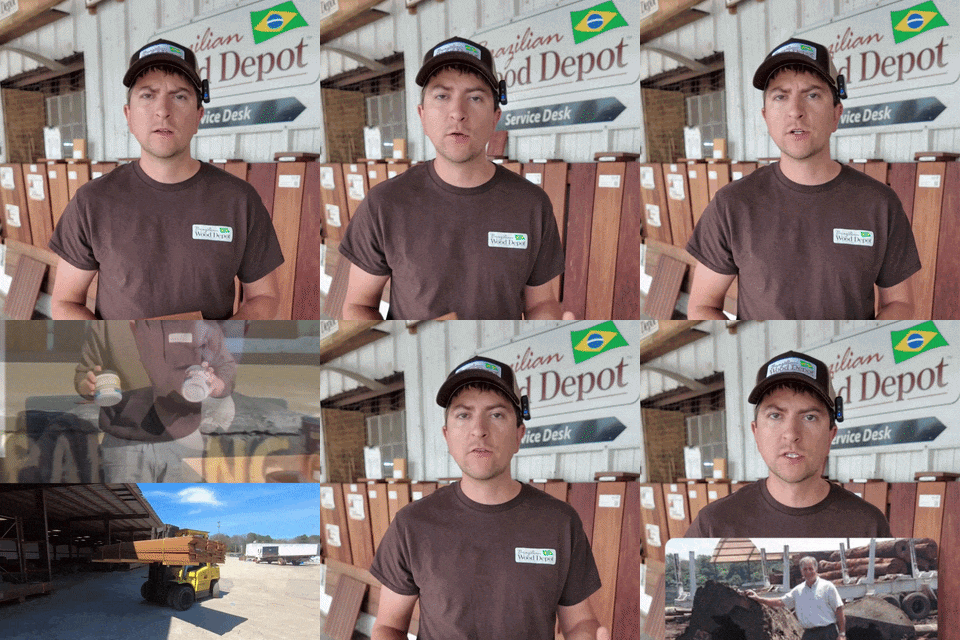
Ipe Decking in 2026: Price, Alternatives, and What You Should Know Before You Build
If you’re researching Ipe Decking, you’re probably asking a simple question: is it still worth it today?
In this video, I break down what’s really happening in the market—why prices have changed, how availability is shifting, and what smart builders are doing instead.
This article builds on that video and connects you to the most important resources, starting with our complete Ipe Decking guide. That page covers performance, lifespan, installation, maintenance, and real-world results to help you make a more confident decision.
Is Ipe Decking Still Worth It in Today’s Market?
Ipe decking is still widely considered the gold standard for outdoor performance. With a 40–75 year lifespan, extreme density, and natural resistance to rot, insects, and weather, it continues to outperform nearly every alternative on the market.
But the real conversation today isn’t about whether Ipe is good—it’s about value.
For years, Ipe was the obvious choice: premium performance at a reasonable price. Today, that equation has changed. Ipe is still one of the best materials you can build with—but it’s no longer the only smart option depending on your project goals.
If you’re just starting your research, it’s worth understanding both sides:
- The long-term durability and performance of Ipe
- The real-world factors that now affect price and availability
For a deeper breakdown of how Ipe performs over time—including weathering, maintenance, and lifecycle expectations—see our guides on
how Ipe decking weathers over time and Ipe deck maintenance and care.
What’s Driving Changes in Ipe Decking Price and Availability?
Ipe (along with Cumaru and other species) has been added to CITES Appendix II, which has increased oversight on harvesting and export. This doesn’t ban Ipe—but it does slow supply and increase cost.
Read more about the full impact of this change in our article on
Ipe market updates after CITES regulation.
At the same time, demand hasn’t gone anywhere. Ipe is still widely used across:
- High-end residential builds
- Commercial projects
- Boardwalks and public infrastructure
- Tighter supply
- Consistent demand
- Rising prices
That’s why more homeowners and contractors are now asking a different question:
“If Ipe is the best… are there other options that get me close—for less?”
Best Ipe Decking Alternatives (And When to Use Them)
There are several hardwood species that can perform extremely well, depending on your environment and installation conditions.
Here are the most common Ipe decking alternatives discussed in the video:
Garapa
Bright, clean appearance paired with dependable exterior stability across a wide range of applications.
- Best uses: Decking, rainscreen siding, ceilings; performs strongly across exterior conditions.
- Fastening guidance: Performs well with surface screws, clips, and CAMO in most installations.
- Sun exposure: Handles heavy, moderate, and low-sun installs reliably.
- Key takeaway: One of the most stable, underappreciated, and cost-effective hardwood options available.
Massaranduba
Dense and durable with consistent coloration, offering predictable performance across exterior builds.
- Best uses: Decking, rainscreen siding, ceilings; a dependable all-around performer.
- Fastening guidance: Surface screws are preferred; clips and CAMO can work, with greater caution in heavy sun.
- Sun exposure: Generally performs reliably from heavy to low sun exposure.
- Key takeaway: A dense, stable hardwood that performs consistently across many exterior conditions.
Purpleheart
A specialty hardwood known for its dramatic color shift under sunlight exposure.
- Best uses: Specialty decking and high-sun installs where rapid color change is acceptable or desired.
- Fastening guidance: Surface screws are strongly preferred; hidden fastening becomes higher risk in strong sun exposure.
- Sun exposure: Sunlight drives rapid color change; lower sun exposure retains purple tones longer.
- Key takeaway: Purpleheart decisions are often about managing color expectations as much as performance.
Brown Balau
Strong performance characteristics with best results in covered or lower-exposure environments.
- Best uses: Decking, ceilings, porch T&G; excels in covered or lower-sun applications.
- Fastening guidance: Surface screws are preferred; hidden fastening can be more sensitive in heavy sun due to movement.
- Sun exposure: More prone to checking in heavy sun; performance improves as exposure decreases.
- Key takeaway: Excellent in lower-sun installs—use surface screws and manage expectations in high UV environments.
How to Choose the Right Hardwood Based on Your Project Conditions
This is the part most people overlook—and it’s where the biggest mistakes happen. That’s why one of the most important resources to review is:
https://www.bwdepot.com/brazilian-hardwood-performance-by-exterior-conditions/
Hardwood performance isn’t just about the species. It’s about:
- Airflow
- Sunlight exposure
- Moisture conditions
- Installation method
This guide shows how different hardwoods behave in:
- Low airflow vs high airflow environments
- Full sun vs covered installations
- Decking vs siding vs ceilings
- Some species perform better with hidden fasteners
- Others are better suited for surface fastening
- And how to avoid issues like cupping, movement, or instability
For installation-specific guidance and fastening systems, see the fastening page and the installation guides hub.
Final Thought: Build for Performance, Not Just Species
Ipe decking is still one of the best materials you can choose. But the smartest builds today aren’t based on habit—they’re based on conditions, performance, and long-term value.
If you want to go deeper:
- Start with the complete Ipe Decking resource hub
- Then explore how different hardwoods perform by conditions
Because in the end, the best deck isn’t just built with Ipe—it’s built with the right material for the job.
Deeper Resources for Species Selection, Installation, and Performance
Project-Specific Guidance
- Decking Wizard – Generate a personalized, condition-based hardwood and fastener recommendation in minutes.
- MyQuote Interactive Resource – A practical reference covering shipping, installation expectations, policies, and common project questions.
Fasteners & Installation Methods
- Surface Screw Certified – The most secure and forgiving fastening method for exterior hardwoods.
- BWD Clip Certified – Hidden fastening guidance for grooved decking boards.
- CAMO Certified – Edge fastening best practices and limitations.
- Installation Guides Hub – Step-by-step multimedia guides for every major hardwood application.
Species-Specific Decking Resources
 https://www.bwdepot.com/wp-content/uploads/2026/02/ChatGPT-Image-May-15-2026-12_37_40-PM.png
1254
1254
Sam
https://www.bwdepot.com/wp-content/uploads/2025/11/brazilian-wood-depot-logo-300x52.webp
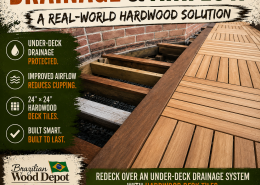
Sam2026-02-03 15:47:362026-05-20 17:14:53Re-decking Over an Under-Deck Drainage System with Hardwood Deck Tiles
https://www.bwdepot.com/wp-content/uploads/2026/02/ChatGPT-Image-May-15-2026-12_37_40-PM.png
1254
1254
Sam
https://www.bwdepot.com/wp-content/uploads/2025/11/brazilian-wood-depot-logo-300x52.webp
Sam2026-02-03 15:47:362026-05-20 17:14:53Re-decking Over an Under-Deck Drainage System with Hardwood Deck Tiles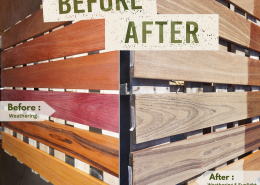 https://www.bwdepot.com/wp-content/uploads/2026/01/Before-and-After-How-Ipe-and-Brazilian-Hardwood-Decking-Weathers-Over-Time.png
1950
1950
Sam
https://www.bwdepot.com/wp-content/uploads/2025/11/brazilian-wood-depot-logo-300x52.webp
Sam2026-01-28 16:22:422026-10-18 14:54:58How Ipe Decking Weathers Over Time (Why It Turns Gray and Why It’s Normal)
https://www.bwdepot.com/wp-content/uploads/2026/01/Before-and-After-How-Ipe-and-Brazilian-Hardwood-Decking-Weathers-Over-Time.png
1950
1950
Sam
https://www.bwdepot.com/wp-content/uploads/2025/11/brazilian-wood-depot-logo-300x52.webp
Sam2026-01-28 16:22:422026-10-18 14:54:58How Ipe Decking Weathers Over Time (Why It Turns Gray and Why It’s Normal)


 https://www.bwdepot.com/wp-content/uploads/2025/11/ChatGPT-Image-May-15-2026-12_46_41-PM.png
1122
1402
BWDepot Sales
https://www.bwdepot.com/wp-content/uploads/2025/11/brazilian-wood-depot-logo-300x52.webp
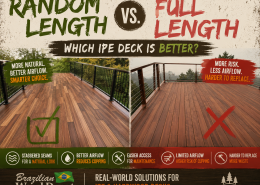
BWDepot Sales2025-11-07 13:22:232026-05-15 16:52:22Full-Length vs Random-Length Ipe Deck Boards: Which Is Better for Your Deck?
https://www.bwdepot.com/wp-content/uploads/2025/11/ChatGPT-Image-May-15-2026-12_46_41-PM.png
1122
1402
BWDepot Sales
https://www.bwdepot.com/wp-content/uploads/2025/11/brazilian-wood-depot-logo-300x52.webp
BWDepot Sales2025-11-07 13:22:232026-05-15 16:52:22Full-Length vs Random-Length Ipe Deck Boards: Which Is Better for Your Deck?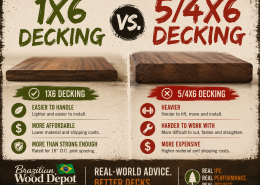 https://www.bwdepot.com/wp-content/uploads/2025/11/ChatGPT-Image-May-15-2026-02_03_26-PM.png
1122
1402
BWDepot Sales
https://www.bwdepot.com/wp-content/uploads/2025/11/brazilian-wood-depot-logo-300x52.webp
BWDepot Sales2025-11-05 14:41:062026-10-06 15:30:351x6 vs 5/4x6 Ipe Decking – Which Size Is Best for Your Hardwood Deck
https://www.bwdepot.com/wp-content/uploads/2025/11/ChatGPT-Image-May-15-2026-02_03_26-PM.png
1122
1402
BWDepot Sales
https://www.bwdepot.com/wp-content/uploads/2025/11/brazilian-wood-depot-logo-300x52.webp
BWDepot Sales2025-11-05 14:41:062026-10-06 15:30:351x6 vs 5/4x6 Ipe Decking – Which Size Is Best for Your Hardwood Deck

 https://www.bwdepot.com/wp-content/uploads/2019/11/f2bff709-ef3a-4aa8-b5dc-819da5565b20.png
1024
1535
atlantaseo
https://www.bwdepot.com/wp-content/uploads/2025/11/brazilian-wood-depot-logo-300x52.webp
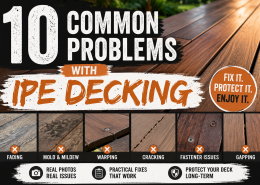
atlantaseo2019-11-12 18:15:482026-08-18 15:14:2810 Ipe problems
https://www.bwdepot.com/wp-content/uploads/2019/11/f2bff709-ef3a-4aa8-b5dc-819da5565b20.png
1024
1535
atlantaseo
https://www.bwdepot.com/wp-content/uploads/2025/11/brazilian-wood-depot-logo-300x52.webp
atlantaseo2019-11-12 18:15:482026-08-18 15:14:2810 Ipe problems